
José Eduardo López Muñoz knew he was about to be deported when his access to the tablets — shared devices detainees use to contact family and pass the time — at the McCook immigration detention center was blocked on March 13.
He was filled with joy.

López Muñoz
López Muñoz had wanted to stay in the U.S. Nearly his entire family was in Nebraska — his aunt, whom he calls mom, had been there for 13 years. His cousins, whom he calls sisters, all were in Omaha. But he rejoiced that his stint at McCook was finally over.
He didn't yet realize his experience in federal detention was about to get much worse.
López Muñoz was transported from McCook to Kearney, and then Omaha. Then Minneapolis. Then Louisiana.
From there, he said a bus carried him to Mississippi, where he was shackled for 12 hours overnight in a small room with concrete benches, crammed shoulder-to-shoulder with about 50 other migrants.
People are also reading…
López Muñoz said each man was given a few sips of water that seemed like sewer water. He said the food they got was nearly inedible — though some of the men who had gone without food for a long time managed to eat it — and compared it to dog food.
McCook hadn't been that bad. But it hadn't been fine, either. López Muñoz said he still has nightmares about both places.
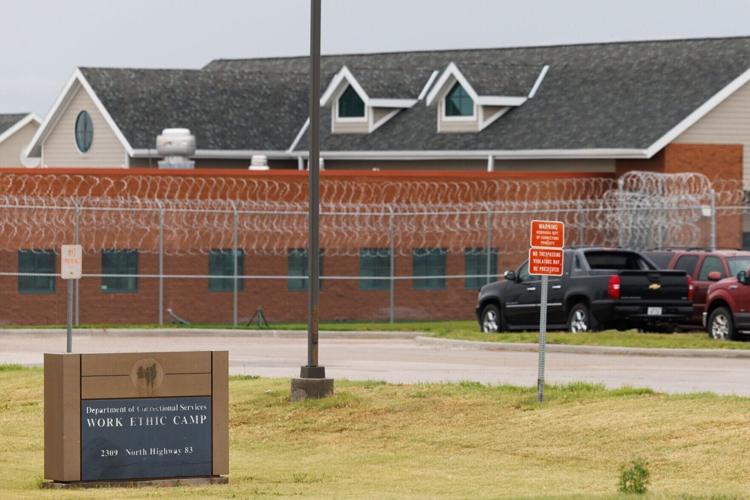
He’s one of more than 150 men who have been detained at the state's former Work Ethic Camp since it began holding migrants detained by the federal government last November.
The Nebraska Department of Correctional Services operates the facility under an agreement with U.S. Immigration and Customs Enforcement.
Across the U.S., conditions inside the rapidly expanding detention system have drawn scrutiny, and some states have raised questions about the federal detention centers, but little is known about the experience of detainees inside Nebraska’s facility — which, until November, had served as a rehabilitative correctional center for state prisoners.
The World-Herald spoke with three men, each of whom was detained in McCook for more than a month, to get a sense of the conditions.
“It changed my life," said a Central American man who spent about six weeks at McCook before being released. "I'm trying to take it the best way because I'm a believer. But personally, I feel like it changed a lot."
Who is at McCook?
According to Adam Sawyer, director of research at Relevant Research and creator of DetentionReports.com, private contractors like CoreCivic or GEO Group operate most immigration detention facilities in the U.S.
McCook is one of at least a dozen new detention facilities operated by state corrections departments working directly with the federal government. Sawyer said states with similar contracts include West Virginia, Indiana, Louisiana, Vermont and Alaska. Florida's facility in the Everglades, nicknamed "Alligator Alcatraz," also operated in this category until it closed.
"People put so much emphasis — and because it is grotesque — (on) the idea that private corporations are benefiting from this," Sawyer said.

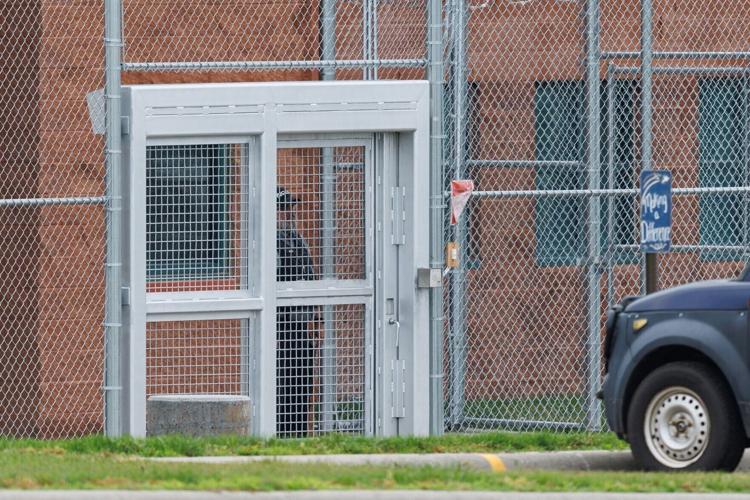
A look at the “Cornhusker Clink” federal detention center in McCook, Neb., on Thursday, June 25, 2026. The detention center was converted from the state-run Work Ethic Camp after Nebraska signed a two-year contract with the U.S. Department of Homeland Security in August.
While national attention has focused on ICE attempts to buy up warehouse spaces around the country and convert them to detention facilities — none of which has opened yet, to his knowledge — Sawyer said ICE also redirected people to former prisons through state partnerships, many of which contracted out operations to those private companies.
"We have to reckon with the fact that … it’s not just private corporations,” he said. “Our public institutions are wrapped up in this and are making money on this, and that's uncomfortable."
McCook is unusual among those state-run facilities in that it had an existing inmate population that was moved to make room for ICE detainees within weeks. Sawyer said he could not think of another facility in the country where that transition happened with no vacancy period between populations.
According to reporting from the Nebraska Examiner, of the inmates who were housed at the Work Ethic Camp at the time of transition:
- 103 were transferred to low-security-level community corrections centers in Omaha and Lincoln.
- 59 were transferred to minimum custody housing at the Nebraska State Penitentiary in Lincoln.
- 17 were transferred to minimum custody housing at the Omaha Correctional Center.
- 7 were released on parole.
- 2 were discharged.
- 1 was placed into post-release supervision.
Gov. Jim Pillen has said using the facility to detain immigrants would net the state $14 million annually. He has described the population the facility would house as a threat to Nebraska communities and said detainees at McCook would not be held solely for the crime of entering the country illegally, saying, "lots of it has to do with drugs."
The men who spoke with The World-Herald did not fit that description.
The World-Herald matched demographic factors and booking dates to identify ICE's recorded data on the three men. None was recorded as having pending criminal charges or prior convictions.
López Muñoz entered the country illegally in February 2025. He has never been charged with a crime, according to López Muñoz and state and federal court record databases.
The other two men, who spoke on the condition of anonymity because they feared speaking publicly could harm their ongoing removal proceedings, had both been in Nebraska for more than 10 years. One was brought to the U.S. as child young enough that he has no memories of the country he was born in.
"I'm just another immigrant," the Central American man said. "Hometown situation — it's the same. Crime, violence, corruption, lack of opportunities brought us up here."
Pillen's office did not immediately respond to a World-Herald request for comment.
According to DetentionReports.com, a nonpartisan Relevant Research project compiling and cleaning ICE’s detention facility data, 61.6% of McCook’s average daily population is listed as noncriminal.
Sawyer said the proportion of criminal detainees at McCook is somewhat higher than the national figure. (According to the latest data from Transactional Records Access Clearinghouse, 70.8% of immigration detainees in the U.S. are noncriminal). But he noted those criminal convictions can range from unpaid traffic tickets to marijuana possession in a state where it was prohibited.
'This is extremely distressing': Life in lockup
The men who spoke with The World-Herald said the facility is divided into lettered dorms — A through E, with a sixth under construction. The population in each dorm ranged from roughly 25 to 50 people.
The facility held 200 beds when it began accepting detainees. The ICE contract requires McCook to reach 300, triggering a flat-rate daily payment rather than the current per-bed-filled rate.
Construction to add that capacity has continued while detainees have been housed there, including the installation of trailers connected to the facility's plumbing, which the men said will have showers and toilets for the additional detainees to use once the bed capacity is increased.
Construction at the facility is on track for completion in July, according to Dayne Urbanovsky, a spokesperson for the Nebraska Department of Correctional Services.
For the men, a typical day started around 6 a.m. Lights turned on, medications distributed, and tablet devices — roughly one for every four detainees — were made available.
The man who was brought to Nebraska as a young child spent about five weeks detained in McCook.
In the dorms, he said, the main diversions were cards, books and tablets.
The tablets cost money to use and shut off at designated hours, the longtime Nebraskan said. Making phone calls on the tablets cost roughly 11 cents per minute, with a daily cap of an hour and a half.
Detainees without outside financial support — someone who knew where they were and could add funds to an account — were effectively cut off from contact with their families, he said.
For the longtime Nebraskan, life at the facility grew more restricted over his stay. When he first arrived, men in his dorm were let outside once a day and into an indoor common area — a room with phones and tables — twice a day.
By about mid-February, the man said the schedule began to change. By the time he was released, the dorm was confined to sleeping quarters from roughly 10 in the morning until 8 the next morning, sometimes with no time outside, he said.
"We pretty much stayed in the dorm the entire day," he said.

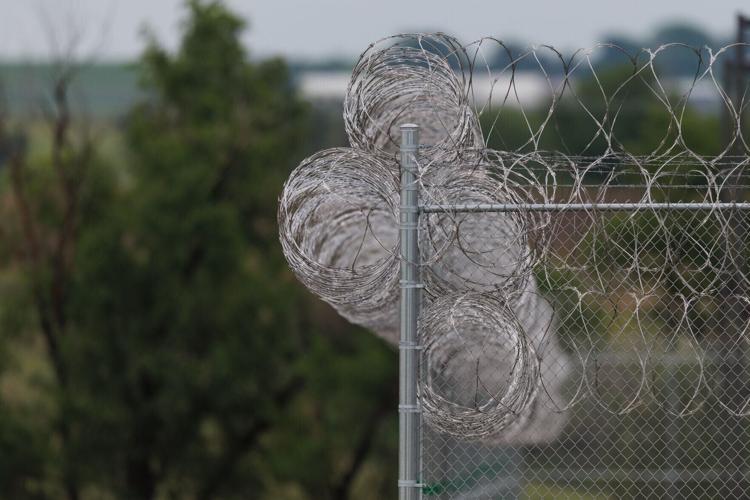
A fence at the “Cornhusker Clink” federal detention center in McCook, Neb., is seen on Thursday, June 25, 2026.
Staff attributed the restrictions to ongoing construction, the longtime Nebraskan said.
Urbanovsky, the Department of Correctional Services spokesperson, said outdoor time at the facility meets or exceeds national detention standards.
Unlike a prison sentence, immigration detention has no end date. Detainees are not serving time for a crime — they are held on civil violations, indefinitely, until their case resolves or they agree to leave.
The Trump administration has argued that virtually every undocumented immigrant should be subject to mandatory detention. That's a departure from how every prior presidential administration interpreted the law, said Caitlin Patler, an associate professor of public policy at the UC Berkeley Goldman School of Public Policy. She studies detention conditions and health impacts.
"This is extremely distressing," Patler said. "It's distressing for anybody. It’s distressing to be arrested. It's distressing to be put in these settings. It's distressing to not know when you're going to get out because these are indefinite — indefinite mandatory detentions. Again, no one's serving a sentence here."
Dirty water: 'They just didn't really care'
At one point, the construction workers had to cut into a water pipe, which the longtime Nebraskan said caused his dorm to lose water access. He said guards warned the detainees so they could make sure to bring extra water with them from the dayroom to drink during the outage.
"When a water pipe was cut during construction, the facility provided coolers of drinking water in each housing unit until repairs were completed and fresh water was flushed through the system," Urbanovsky said.
All three detainees described an ongoing issue with water at the facility. The longtime Nebraskan described it as having visible floating particles and a faint smell he said he could only compare to a sewer.
López Muñoz said showering in the water gave some detainees hives.
The only source of drinking water in the dorms was the bathroom sink, the formerly detained men said.
The dayroom had a water fountain some detainees thought to be better quality, the longtime Nebraskan said, but they weren’t allowed to access it during the hours they were confined to the dorms.
“We voiced our concerns,” the longtime Nebraskan said. “We told them about the water, and I guess they just didn’t really care too much.”
A man from Central America who moved to Nebraska more than 10 years ago said the water looked rusty and yellowish. It complicated his cleaning duties while working for the facility and earning $1 per day.
He said he asked a guard about the water, and the guard told him it was a citywide issue.
The detention facility in McCook is on the city’s municipal water supply, McCook Utilities Director Pat Fawver wrote in an email to The World-Herald. Fawver said the city’s water meets or exceeds all state and federal water quality standards.
“The water that is supplied to the facility is 100% safe and approved by (the) state and (the Environmental Protection Agency),” he wrote.
Kirin Faust, an associate professor in Virginia Tech's Department of Civil and Environmental Engineering, said the water that comes out of a faucet isn't always the same quality as the water regulated at the point of entry.
The water can pick up contaminants along its route through a facility's distribution system. Faust noted that even when aesthetic properties of water don't pose direct health risks, it can still lead to health problems because people are less likely to want to drink water that looks dirty, which can lead to dehydration.
Sawyer said water problems at converted detention facilities are common — noting the documented food and water issues at Camp East Montana in El Paso, Texas.
'They're doing their jobs'
For the most part, the three former detainees described McCook’s immigration detention staff as professionals following procedure.
“I think they are just a new facility,” the Central American man said. “They're doing their jobs. They're another human being like everybody else.”
He said staff could work on their willingness to make accommodations and understand the position the detainees are in — watching the news in the dorms every night, hearing that people are dying in detention facilities like the one they’re trapped in.
“Sometimes we feel … like we want them to be more like in our shoes — as human beings,” he said.
The longtime Nebraskan said he thought guards could use better training on how to treat people. He recalled a moment during outdoor time when their only soccer ball was kicked over the fence and a guard refused to retrieve it. When detainees complained, he said the guard called them criminals.
“That was kind of crazy hearing that,” he said, noting that many of the people detained in McCook had never committed a crime.
Patler said what might seem like a minor slight in another context can compound into something more serious inside a detention facility.
She said her research shows each condition of confinement — limited sunlight, restricted movement, no privacy, poor nutrition, verbal abuse and so on — independently harms detainees’ health.
Being called a criminal when you haven't committed a crime, she said, lands differently when you are also locked in a dorm for 22 hours, drinking dirty-looking water from a bathroom sink and waiting days for responses to requests.
"All your choices are taken away from you," Patler said. "Your agency is taken away from you. You can't make phone calls to your family whenever you want. ... All of that stuff, it takes away one's own sense of control over their lives — and that can be really destabilizing."
'I never thought I was going to return that way'
That’s why López Muñoz was relieved when he realized he was getting deported — his time at the McCook facility was over.
The trauma wasn’t.
At 2:30 a.m., guards came for him. They returned his belongings, put him in shackles and loaded him into a vehicle. He stopped in Kearney, then Omaha, where he was held for more than 24 hours — in shackles the whole time, in what he believes may have been the ICE field office near Eppley Airfield.
"That's where you're treated the worst," he said.
He said guards there were more aggressive than at McCook, quicker with racist comments and refused to let detainees speak. From Omaha, he was flown to Minnesota, where the plane sat for three hours while more detainees boarded. Then Louisiana. His feet and hands went numb from the shackles. By the time he stepped off the plane, he could barely walk.
In accordance with U.S. ICE policy, adult detainees transported by ICE Air aircraft are "fully restrained by the use of handcuffs, waist chains, and leg irons during CONUS and OCONUS flights," an ICE spokesperson said.
A bus carried him to a facility in Mississippi. He was there for roughly two and a half days. The first 12 hours — from around 10 p.m. to 10 a.m. — he spent in a small, dark room with about 50 other men, shackled, standing so close together he could not extend his arms without touching someone. There was one toilet. The room smelled. No one explained where they were or what would happen next.
After several hours, they were given food. He said it looked like dog food, and the water tasted bad.
"You're tired, sore, hungry," he said.
In an emailed response to a World-Herald request for comment, an ICE spokesperson said ICE uses "hold rooms" for the "least amount of time required for their processing, transfer, release or repatriation as operationally feasible" — typically under 12 hours.
"Hold rooms are used only for temporary occupancy and comply with all applicable standards," the spokesperson said.
He said the cells they were moved to after that were small and smelled. The toilet was dirty. He barely ate. A female guard with a wheelbarrow made him carry it inside, he said, speaking to him aggressively in broken Spanish, then laughed.
"I cried because I didn't know how long I'd be there for," he said.
From Mississippi, he was bused back to Louisiana — about five hours — and flown to Guatemala. A half hour before landing, guards removed his shackles.
"I felt sad when I landed," he said. "I never thought I was going to return that way."
He landed in Guatemala alone. His closest family is in Omaha. His mother died and his father left when he was young. The aunt he calls mom has been in Nebraska for 13 years. The cousins he calls sisters are here, too.
Patler said when she heard López Muñoz's account — McCook, then Omaha, then the shackled flights, then Mississippi — she didn't think about which was worse.
"They're different, but they're on a continuum," she said.
For the two men who were released on bond, the end of their time at McCook wasn’t the end of their ordeal.
Once the longtime Nebraskan’s family posted his bond, he was transported from McCook to North Platte — at what appeared to be a small ICE processing location, he said, noting the cell had ICE posters on the walls. His family expected to pick him up there.
But when processing was done, a staff member gave him three options for where he would be dropped off: a bus stop, a motel or a truck stop.
He said he was so surprised when he realized he wouldn’t be waiting for his family there that he didn’t think to ask why he was being taken to a random public location.
“They kind of just said, ‘These are your options. Choose one,’” the longtime Nebraskan recalled. “And then I pretty much was left on my own from there.”
He chose the truck stop. His phone — dead after more than a month — and the money he had on him when he was detained had been returned, so he bought a portable charger and contacted his family.
If he hadn't had his phone and money, he said, he would have been stranded.
"ICE’s protocol for releasing individuals from custody includes ensuring they are safely discharged and provided with information and resources to facilitate their transition," the ICE spokesperson said. "The agency strives to release individuals at locations with access to transportation and communication resources, and personnel are instructed to assist with arrangements when possible."
Sawyer said the practice of releasing detainees at public locations with no resources is not isolated to McCook. Nurul Amin Shah Alam, a nearly blind 56-year-old Rohingya refugee, was found dead in Buffalo, New York, on Feb. 24, 2026 — five days after U.S. Border Patrol agents left him alone outside a closed Tim Hortons in near-freezing temperatures without notifying his family.
Sawyer said his colleagues believe that deaths linked to inadequate discharge practices are systematically undercounted in ICE's official death reporting, because ICE sometimes offloads individuals to streets or hospitals before they die — allowing the agency to classify the death as occurring outside its custody.
"We all suspect that the migrant death reporting is … an undercount," Sawyer said.
The ICE spokesperson said the claim the ICE discharges vulnerable or critically ill people to avoid medical liability or undercount in-custody deaths is unfounded.

A look at the “Cornhusker Clink” federal detention center in McCook, Neb., on Thursday, June 25, 2026.
"ICE maintains a higher standard of care than most prisons that hold U.S. citizens, including providing access to proper medical care," the spokesperson said. "For many individuals in ICE custody, this is the best healthcare they have received in their entire lives. All detainees are provided with proper meals, water, medical treatment and opportunities to communicate with family members and legal representatives."
'You lose everything': Life after detention
López Muñoz, the longtime Nebraskan and the Central American man survived.
López Muñoz is back in Guatemala. For months, he was unemployed, searching for work in a country he left two years ago because there was none. He eventually found work for less than minimum wage. He still has nightmares, sometimes about Mississippi, sometimes about McCook.
“They play a lot with your mind,” he said. “Sometimes you start feeling like you're going mad.”
The longtime Nebraskan is back home, waiting, searching for work. His case is still open. He lost his job after no-call-no-showing for five weeks and hasn’t found another.
The Central American man, who also lost his job, is in Nebraska too, reunited with his wife and children. He’d been in town long enough to build a stable life busy with work, church, friends, quinceañera parties.
Most of that is gone now.
"You lose everything that you have done in your time living in the States," he said.
The friends stopped calling. They didn't want to be associated with a man ICE is watching.
“It's understandable,” he said. “I understand that, but … it makes you feel like you're the worst person in the world.”
He still has his family. And that’s enough, he said, but even they can tell that detention changed him.
Patler said the research on long-term health consequences of immigration detention is consistent. The effects extend well past release. Symptoms of anxiety, depression and post-traumatic stress are common, she said, and often compound the ongoing uncertainty of pending immigration cases.
The social stigma compounds it further — even people with no criminal record find that others in their community, fearful of association, stop calling.
“There is an intent to make this a miserable experience,” Sawyer said, “because they want to force people to say, ‘You know what, just deport me. I don't even care anymore.’”
There is no evidence that detention produces better outcomes in immigration proceedings than alternatives, Patler said. Electronic monitoring costs roughly $8 a day per person, she said. Detention costs over $200.
When the Central American man came home to his wife and children after more than 40 days in detention, he told them he was sorry if he seemed distant. He said there was pain in his brain that he couldn't articulate.
He held his family.
"If I'm seeing you, if I'm watching you right now," he told them, "it's a miracle of God. I thought that I wouldn't ever see you again."
Photos: McCook Work Ethic Camp in transition to “Cornhusker Clink” detention center

A look at the Work Ethic Camp facility in McCook, Neb., on Friday, Oct. 24, 2025. Nebraska has signed a two-year contract with the U.S. Department of Homeland Security to use the prison in McCook as the “Cornhusker Clink” federal detention center.

A group of demonstrators hold signs outside the Red Willow County Courthouse in McCook, Neb., on Friday, Oct. 24, 2025. Nebraska has signed a two-year contract with the U.S. Department of Homeland Security to use the McCook Work Ethic Camp prison in McCook as the “Cornhusker Clink” federal detention center.

A look at the Work Ethic Camp facility in McCook, Neb., on Friday, Oct. 24, 2025. Nebraska has signed a two-year contract with the U.S. Department of Homeland Security to use the prison in McCook as the “Cornhusker Clink” federal detention center.

A corrections officer carries cones to an entrance at the McCook Work Ethic Camp on Oct. 24.

Workers use a lift to adjust the perimeter fence to the Work Ethic Camp facility in McCook, Neb., on Friday, Oct. 24, 2025. Nebraska has signed a two-year contract with the U.S. Department of Homeland Security to use the prison in McCook as the “Cornhusker Clink” federal detention center.

Red Willow County Sheriff's deputies watch on as a group of demonstrators hold signs outside the county courthouse before a hearing on the “Cornhusker Clink” federal detention center in McCook, Neb., on Friday, Oct. 24, 2025. Nebraska has signed a two-year contract with the U.S. Department of Homeland Security to use the McCook Work Ethic Camp prison in McCook as the “Cornhusker Clink” federal detention center.

A look at a water tower in McCook, Neb., on Thursday, Oct. 23, 2025.

A group of demonstrators hold signs outside the Red Willow County Courthouse in McCook, Neb., on Friday, Oct. 24, 2025. Nebraska has signed a two-year contract with the U.S. Department of Homeland Security to use the McCook Work Ethic Camp prison in McCook as the “Cornhusker Clink” federal detention center.

Jim Glenn of McCook holds an American flag with a sign my his feet reading "Pillen is selling out McCook" outside the Red Willow County Courthouse in McCook, Neb., on Friday, Oct. 24, 2025. Nebraska Gov. Jim Pillen signed a two-year contract with the U.S. Department of Homeland Security to use the McCook Work Ethic Camp prison in McCook as the “Cornhusker Clink” federal detention center.

A look at the Work Ethic Camp facility in McCook, Neb., on Friday, Oct. 24, 2025. Nebraska has signed a two-year contract with the U.S. Department of Homeland Security to use the prison in McCook as the “Cornhusker Clink” federal detention center.

Attorneys from the Nebraska Attorney General's office stand outside the Red Willow County Courthouse after a hearing on the “Cornhusker Clink” federal detention center in McCook, Neb., on Friday, Oct. 24, 2025. Nebraska has signed a two-year contract with the U.S. Department of Homeland Security to use the McCook Work Ethic Camp prison in McCook as the “Cornhusker Clink” federal detention center.