
Students who attend Nebraska's state colleges will pay 3.75% more in tuition for the 2026-27 academic year.
Earlier this month, the Nebraska State College Board of Trustees approved the increase, which applies to undergraduate and graduate students attending campuses in Peru, Wayne and Chadron.

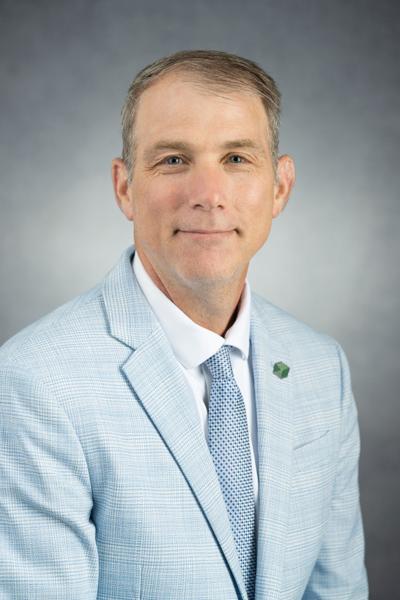
Turman
Both resident and nonresident undergraduate students attending a state college full time can expect to pay $209.50 per-credit hour in the coming year, which is an increase from the $201.90 rate charged last year.
Graduate students will be charged $261.90 for each credit hour taken under the new tuition price, which is an increase from about $252 in 2025-26.
The new tuition rates also include a steep reduction for out-of-state graduate students. This year, non-Nebraskans pursuing a master's degree at a state college will pay the same as homegrown students: $261.90.
People are also reading…
Last year, those students paid nearly $505 per-credit hour. The new rate is roughly a 48% cut.
State College Chancellor Paul Turman said the reduction follows a policy change enacted by the board earlier this year to keep graduate tuition rates at 125% of the undergraduate rates.
Currently, there are no nonresident graduate students enrolled at Peru, Chadron or Wayne, Turman said, but the state college system hopes slashing the price may change that, he said.
It will also help those campuses, all of which have athletic programs, recruit and retain student-athletes, Turman said, and allow graduates who move to other states to come back to further their education.
"A lot of those students have dual credit and they are finishing sometimes in three years and then to finish out their athletic career, they'll maybe go into a graduate program," he said.
If a student-athlete comes to Chadron from outside the state and finishes in three years, in order to complete their eligibility, they would then be forced to pay more than twice the price to finish. Turman said the colleges' limited athletic scholarships could not accommodate that increase.
Reducing the out-of-state tuition rate for graduate students may also benefit Nebraska state college graduates who move to other states but want to come back for a master's degree where they got their undergrad degree, Turman said.
"We just want to give them the opportunity to do that at a rate that seems reasonable," Turman said.
Moving the nonresident graduate student tuition rate completes a realignment of the state college's pricing for students that began in 2013.
That year, the Board of Trustees approved the "Eagle Rate" at Chadron State, which created a $1 differential between in-state and out-of-state tuition rates for students.
Turman said the college, which is located in Nebraska's Panhandle, requested the rate in order to draw students from Colorado, South Dakota and Wyoming.
The board approved a similar pricing structure for Peru State, in the far southeastern corner of the state, in 2016, and for Wayne State in the northeast corner of the state in 2021.
A year later, in 2022, the board approved a plan to align the tuition rates — both in state and out of state — at all three colleges, Turman said.
"It was causing issues with our tuition tables to have that $1 difference," he said. "It was more work than was necessary to track that, so the campuses asked for that to be changed and we supported that recommendation."
The move follows similar efforts in other states. In South Dakota, for example, several institutions offer in-state tuition rates to students from any bordering state.
Making tuition for resident and nonresident students the same has been beneficial, Turman said. At Chadron State, approximately half of its 1,559 students are from outside Nebraska, which helps bring new people into the state.
"We want to be competitive in that marketplace to recruit students," Turman said. "We do retain a good number of nonresident students who come to us, so in our mind it's a win-win."
The latest tuition increase follows a 3% increase for the 2025-26 school year. The state colleges also increased tuition by 3.2% in 2023-24 and by 2.1% in 2024-25.
The State College Board of Trustees also approved the operating budgets for its three campuses and its system office located in Lincoln. The total cost to run the state college system for 2026-27 will be roughly $200.1 million.
Wayne State, the largest campus, will see its budget increase by 1.9% this year to $95.6 million; Chadron State's budget will remain flat at $61.8 million; and Peru State's budget will decline by 6.8% to $37 million.
Turman said Wayne State's growth reflects increases in tuition and fee revenue, which has grown by about 4% annually in recent years. Peru State saw a decline in federal student aid and a loss in overall cash revenue.
The system office's budget will go up by about 2.2% this year. Included in the $5.7 million are new grants that support efforts across the state college system.
Nebraska's state colleges will see a 2.8% increase in state appropriations for the coming year, but will also be forced to manage a $850,000 shortfall this year through spending reductions and changes to its operations.