
As Nebraska prepares to implement the first-ever federal tax credit scholarship program, education advocates believe the state’s public school students could also benefit.
Though regulations have yet to be released, the U.S. Treasury Department previewed guidance on June 10 for the tax credit program set to take effect Jan. 1, 2027.
Gov. Jim Pillen announced in September 2025 that Nebraska will opt into the program, as have all Republican-led and some Democratic-led states.
Taxpayers in participating states will earn dollar-for-dollar tax credits, up to $1,700 annually, when they donate to scholarship-granting nonprofits. Those groups then distribute the money to families seeking assistance paying for educational expenses.
People are also reading…
This means that the federal plan, the first of its kind, will allow parents to use taxpayer dollars on private school tuition.
Nebraska's school choice history
The federal program won't be the first time Nebraska students in private schools will be able to benefit from taxpayer dollars.
Advocates for private school scholarships in Nebraska have faced multiple roadblocks in their frequent attempts to implement similar programs locally over recent years.
In 2023, the Legislature approved the Opportunity Scholarships Act, which set aside $10 million in state funds for private school vouchers.
Public school advocates later launched a successful petition drive to put the fate of the measure in the hands of voters, collecting more than 117,000 signatures across the state.
Royers
But before Nebraskans could vote on whether to retain the law in November 2024, lawmakers approved a measure that essentially replaced the 2023 tax credit program to instead set aside $10 million of state funding for private school vouchers.
The Nebraska State Education Association, the state's teachers union, was then forced to embark on a second petition drive to repeal the new law, which again proved successful. After collecting more than 87,000 signatures, over 57% of Nebraska voters elected to repeal the scholarship law last November.
Federal program could benefit public schools
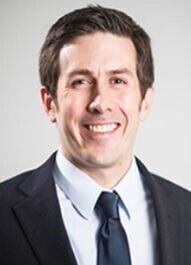
While the final federal regulations are expected in September, Tim Royers, president of the Nebraska State Education Association, said he’s already involved in conversations to see how public school students could also benefit.
In an ideal world, Royers said Nebraska wouldn't participate in the tax credit program because of fundamental problems with it.
Among his issues is the income limit — families who earn less than 300% of their area's median income can qualify for scholarships.
In Lincoln, the median household income is $71,867, according to 2024 census data, meaning families who make a combined $215,000 a year in the Capitol City would still be eligible for the tax credits.
“If you make a quarter of $1 million in Omaha, you’re eligible to receive public assistance essentially to go to private school,” Royers said. “That, to me, really flies in the face of a whole lot of things that we philosophically believe in.”
Even though it’s a program he would like to see Nebraska opt out of, Royers said he does see potential avenues for public school students to benefit.
Unlike Nebraska’s past attempts to implement a similar program, the federal one is not limited to private and parochial schools. Though public school students wouldn’t use scholarships for tuition costs, they could be eligible for funds to cover services like tutoring or before- and after-school programs.
“If Nebraska has to live in this world, we’ll play in such a way that tries to prioritize dollars going to all kids,” Royers said.
He said the NSEA has had conversations with public school foundations about registering as scholarship-granting organizations, the groups that are responsible for distributing the funds to students.
“Then you can take the dollar-for-dollar tax credit dollars, and you can use that to provide subsidized, or even fully paid for, before and after school care,” Royers said.
In an email, a Lincoln Public Schools spokesperson said the district won't know how the federal program will affect its students until the Treasury Department shares regulations.
The Treasury Department has told states to expect regulations by the end of September, but Royers said he wouldn’t be surprised if they come later. Once they’re announced, he said he’ll have a better understanding of the ways public schools and public programs will be able to benefit.
One program that Royers said might be able to leverage the federal tax credit is the Nebraska SMART virtual tutoring program, a collaboration between the Nebraska Department of Education and the Nebraska State College System.
The grant-funded program, which paired teacher education candidates with K-12 students in any Nebraska school for free tutoring, ran out of funding this year. Royers sees the federal tax credit program as a way to keep the SMART tutoring available, perhaps by creating a statewide scholarship-granting organization.
He’d like to see the SMART program collect money and continue operating as is — serving public, private and homeschooled students without stipulation — rather than have to adapt to a tuition-based model.
“The idea that an individual might need to apply to access something is kind of foreign to how we usually structure our programs,” he said.
Already existing scholarship-granting organizations, formed when Nebraska's Opportunity Scholarship Act went into effect, are now preparing for the federal program.
'A waiting period'
Lauren Gage, director of marketing and outreach with Opportunity Scholarships of Nebraska, said the organization is looking forward to handing out scholarships to students at nonpublic schools starting with the 2027-28 school year.

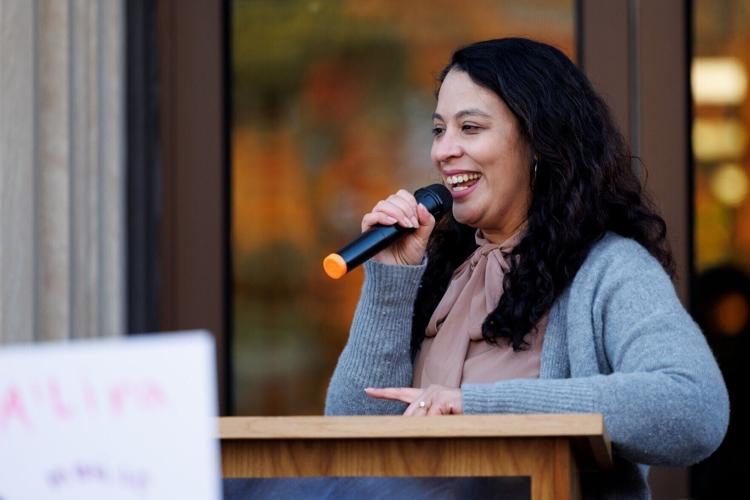
Lauren Gage speaks during a news conference outside Holy Name School in Omaha on Oct. 31, 2024.
“We are in a little bit of a waiting period, but to us, we kind of see it as a ramping-up period,” Gage said. “We're able to prepare a lot more than we were able to for the state tax credit program.”
Much of that preparation has been meeting with the organization's 130 partner schools across the state, and Gage said additional schools are still committing to a partnership. Raising awareness with taxpayers is a critical piece as the organization prepares to accept donations in January, Gage said.
“One thing that we say, that I think is a really great incentive for people, is these are what would be federal tax dollars that get to stay in Nebraska,” she said.
While the Opportunity Scholarship Act allowed Nebraskans to receive a dollar-for-dollar credit higher than the federal program's $1,700 limit, Gage said she doesn't anticipate that change harming how much the organization will be able to raise. Opportunity Scholarships of Nebraska's median contribution was $4,000 while the organization was accepting donations, Gage said.
“It's going to be more of a quantity game,” she said. “We're going to get a lot of people to give this amount.”
Gage said scholarships have already benefited students who didn't previously attend a private school. Of the 1,761 scholarships given out for the 2024-25 school year, Gage said 1,075 went to students who were new to their private school, either because they transferred from a public school or were entering kindergarten or ninth grade.
“There's so many stories across the state of families who found a good fit in the nonpublic school, and they either never thought it was possible or they now don't have to get more jobs,” she said.